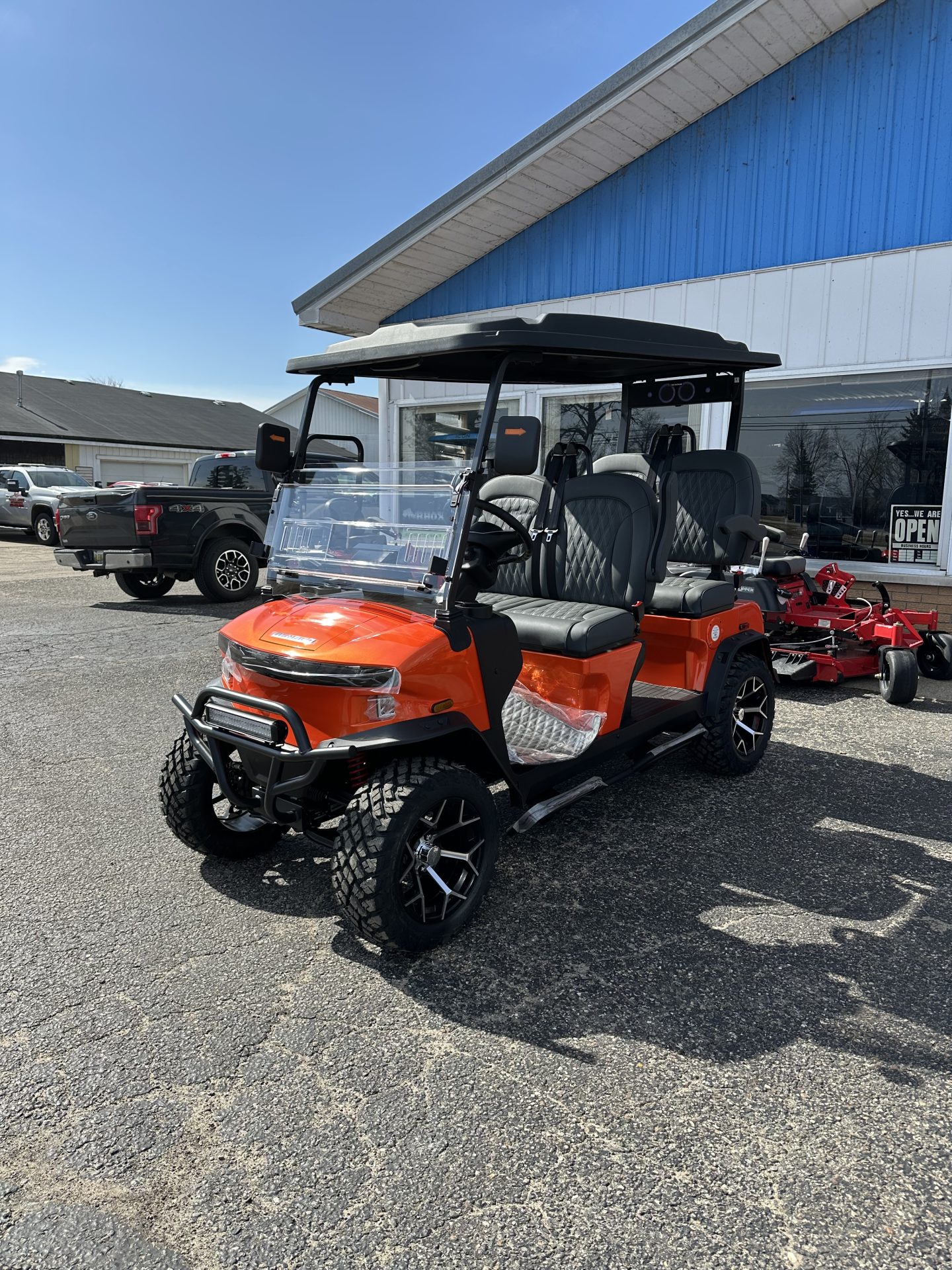
Lithium ion golf cart batteries deliver superior performance in Northern Michigan’s cold weather conditions, maintaining power output and charging efficiency where traditional lead acid batteries struggle. KM Powersports in Houghton Lake serves Northern Michigan with lithium-powered golf carts from brands like ICON, Epic, and Denago EV, plus conversion services for existing carts.
How Lithium Ion Batteries Perform in Northern Michigan Weather
Northern Michigan’s harsh winters present unique challenges for golf cart batteries that many owners discover the hard way. Traditional lead acid batteries lose significant capacity as temperatures drop, often delivering only half their rated performance when the mercury dips below freezing. Lithium ion golf cart batteries maintain consistent power output across a much wider temperature range, making them particularly valuable for year-round property maintenance or early spring golf cart preparation in the Houghton Lake area.
The chemistry differences explain why lithium batteries excel in cold conditions. Lead acid batteries rely on chemical reactions that slow dramatically in cold weather, while lithium iron phosphate cells maintain their electrochemical efficiency even when stored in unheated garages or sheds during Roscommon County winters. This translates to reliable starts and consistent performance when you pull your golf cart out of storage for the first warm weekend of spring.
At KM Powersports, we regularly see customers frustrated with lead acid battery performance during shoulder seasons. A customer with a lakefront property near Higgins Lake recently described how their traditional battery system would barely power their golf cart for a single trip to the dock after sitting unused through winter. The same cart equipped with lithium ion batteries starts immediately and delivers full range even after months of storage.
Lithium batteries also charge more efficiently in cooler temperatures, an advantage that extends the practical golf cart season in Northern Michigan. While lead acid systems may require special winter charging protocols or heated storage to prevent damage, lithium systems continue accepting charge normally even when stored in unheated outbuildings. This resilience proves especially valuable for seasonal residents who visit their Houghton Lake properties sporadically during fall and spring months.
The reduced maintenance requirements of lithium systems become even more pronounced in harsh climate conditions. Lead acid batteries require regular water additions and terminal cleaning, tasks that become problematic when dealing with frozen electrolyte or corroded connections after a long winter. Lithium ion golf cart batteries eliminate these maintenance headaches while delivering consistent performance regardless of seasonal weather patterns.
Cost Analysis: Lithium Ion vs Lead Acid Battery Systems
The upfront cost difference between lithium ion golf cart batteries and traditional lead acid systems often surprises first-time buyers, but the long-term economics tell a different story. Lead acid batteries typically require replacement every three to five years under normal use conditions, while lithium systems often deliver eight to ten years of reliable service. This lifespan difference fundamentally changes the total ownership cost equation for golf cart owners in Northern Michigan.
KM Powersports customers frequently ask about the return on investment timeline for lithium battery upgrades. The calculation depends on usage patterns and maintenance costs, but most active golf cart users see payback within four to six years. A typical six-volt lead acid battery set requires replacement twice during the lifespan of a single lithium system, plus the ongoing costs of distilled water, terminal cleaners, and more frequent charging cycles.
The efficiency advantages of lithium technology also reduce electricity costs over time. Lithium ion batteries accept charge more efficiently and hold that charge longer during storage periods. According to the Battery University, lithium systems typically achieve 95-98% charging efficiency compared to 80-85% for lead acid batteries. For golf cart owners who charge frequently during active use seasons around Houghton Lake, this efficiency difference accumulates into measurable savings on electric bills.
Replacement labor costs favor lithium systems as well. Lead acid batteries require more frequent service visits and eventual disposal fees, while lithium batteries often outlast the golf carts themselves. The reduced weight of lithium systems also makes installation and replacement easier, potentially reducing service costs when work is needed.
Many of our customers at 6803 West Houghton Lake Dr initially focus on the purchase price difference, but they quickly appreciate the reduced maintenance time and improved reliability that lithium systems provide. The peace of mind factor has real value for customers who depend on their golf carts for property maintenance or transportation around lake communities.
Holds power in the cold, 8–10 years of service, 2–4 hour charging, and near-zero maintenance.
Loses up to half its capacity below freezing, 3–5 year lifespan, 8–12 hour charging, plus regular watering and cleaning.
Charging Speed and Range Benefits for Daily Golf Cart Use
Charging speed represents one of the most noticeable day-to-day advantages of lithium ion golf cart batteries for active users. Traditional lead acid systems require eight to twelve hours for a complete charge cycle, often forcing golf cart owners to plan their usage around overnight charging schedules. Lithium systems typically complete full charging in two to four hours, enabling multiple trips per day without extended downtime.
This charging speed advantage proves particularly valuable for golf cart owners who use their vehicles for property maintenance, dock access, or frequent trips between buildings on larger Northern Michigan properties. A customer with acreage near St Helen recently explained how lithium batteries transformed their routine. Instead of planning one major trip per day with their lead acid equipped cart, they now make multiple trips as needed, charging quickly between uses.
The consistent power delivery of lithium systems also extends practical range compared to lead acid batteries. Lead acid batteries experience voltage drop as they discharge, reducing motor performance and hill-climbing ability as the charge level decreases. Lithium batteries maintain steady voltage output throughout their discharge cycle, delivering consistent performance until the battery is nearly depleted.
Range consistency becomes especially important for golf cart users navigating the rolling terrain common around Houghton Lake and surrounding areas. Hills that become challenging climbs with a partially discharged lead acid system remain manageable throughout the entire range of a lithium-powered cart. This predictable performance helps owners plan longer trips with confidence.
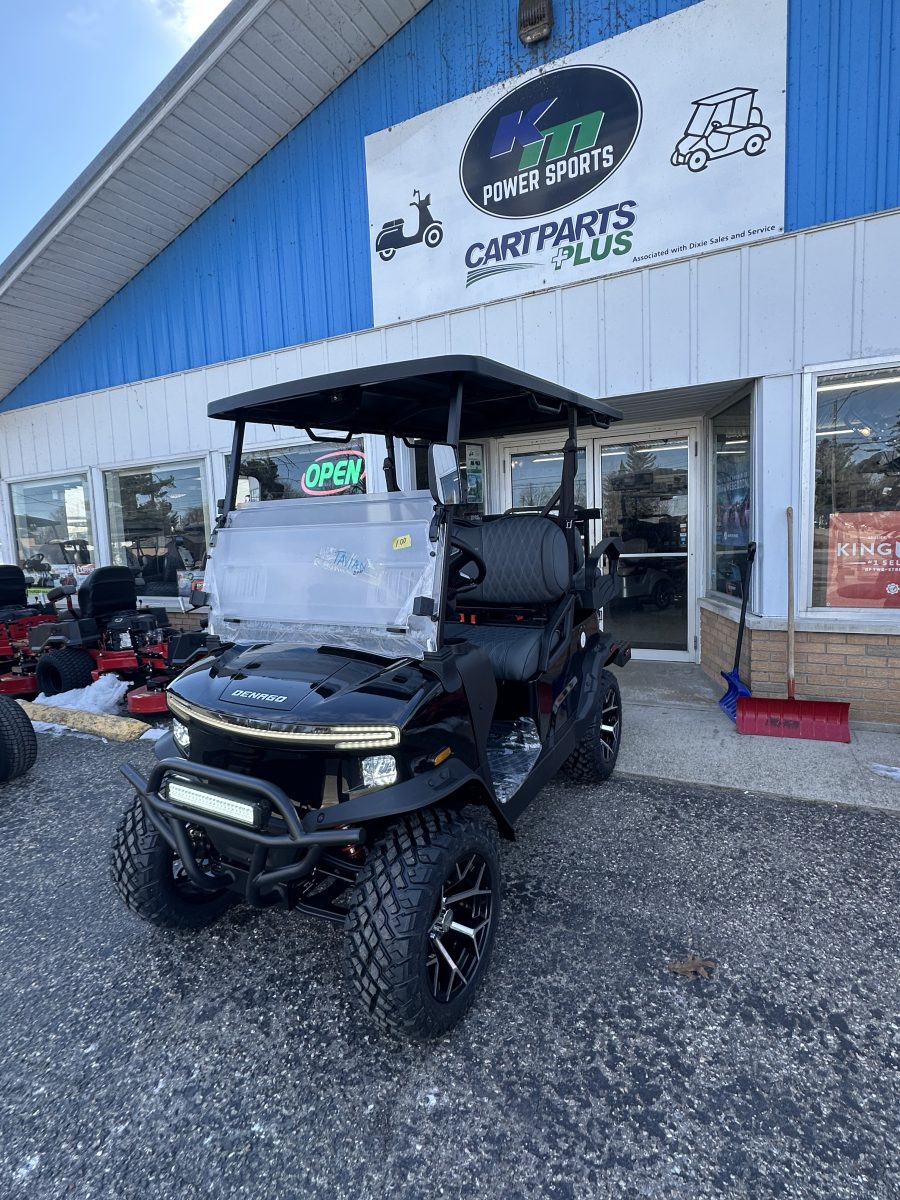
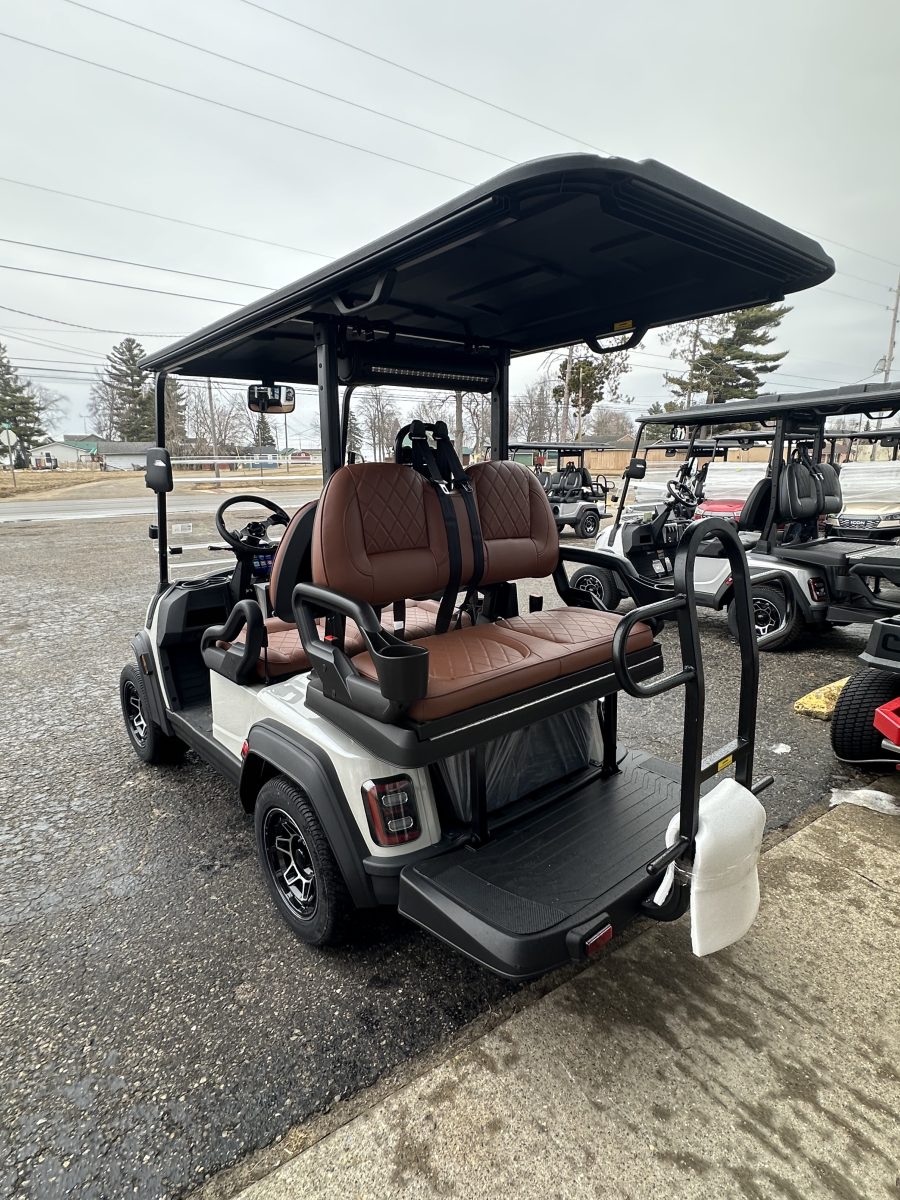
KM Powersports stocks golf carts from manufacturers like ICON, Epic, and Denago EV that showcase the range capabilities of modern lithium systems. These vehicles demonstrate how improved battery technology enables golf carts to serve as reliable property transportation rather than just recreational vehicles. The combination of faster charging and extended range makes lithium-powered carts practical for daily utility use in rural Northern Michigan settings.
The reduced charging frequency required by lithium systems also extends their lifespan. While lead acid batteries degrade with each charge cycle, lithium systems tolerate partial charging without damage. Golf cart owners can top off their batteries as convenient rather than waiting for complete discharge cycles, a flexibility that proves valuable during peak usage periods.
Converting Your Existing Golf Cart to Lithium Ion Power
Converting an existing golf cart to lithium ion batteries offers an alternative to purchasing a new lithium-equipped vehicle, though the process requires careful consideration of compatibility and cost factors. Not all golf carts make good conversion candidates, and successful conversions require matching the lithium system voltage and capacity to the existing motor and controller specifications.
The conversion process typically involves replacing the battery bank, charger, and sometimes the charge controller to accommodate lithium chemistry requirements. Lead acid chargers use different charging profiles than lithium systems require, making charger replacement essential for safe operation. KM Powersports evaluates each conversion project individually to determine compatibility and recommend appropriate components.
Voltage matching represents the most critical technical consideration for lithium conversions. A golf cart originally designed for six-volt lead acid batteries requires a lithium system that delivers equivalent voltage to maintain proper motor operation. Mixing battery chemistries or mismatching voltages can damage motor controllers or create safety hazards, making professional evaluation important before beginning conversion work.
The age and condition of the existing golf cart influence conversion economics. Converting a well-maintained cart with recent motor and controller components often makes financial sense, while converting an older cart with multiple worn components may cost more than purchasing a newer lithium-equipped vehicle. Our technicians at KM Powersports help customers evaluate whether conversion or replacement provides better long-term value.
Space and mounting considerations also affect conversion feasibility. Lithium batteries typically require less space than equivalent lead acid banks, but they may need different mounting configurations or ventilation requirements. Some golf carts have battery compartments specifically designed for lead acid dimensions that require modification for lithium installation.
Conversion projects provide an opportunity to upgrade other electrical components simultaneously. Adding LED lighting, upgraded controllers, or additional accessories becomes more practical when the electrical system is already being modified for lithium compatibility. These comprehensive upgrades can transform older golf carts into modern utility vehicles with significantly improved performance and reliability.
Customers considering conversion should also factor in warranty implications. Converting newer golf carts may affect manufacturer warranties, while converting older carts typically presents fewer warranty concerns. Professional installation helps ensure conversions meet safety standards and provide reliable long-term operation.
Frequently Asked Questions
How long do lithium ion golf cart batteries last in Northern Michigan weather?
Lithium ion golf cart batteries typically provide eight to ten years of reliable service in Northern Michigan conditions, significantly outlasting traditional lead acid batteries that usually require replacement every three to five years. The cold weather tolerance of lithium systems actually helps extend their lifespan compared to lead acid batteries that suffer damage from freezing temperatures. KM Powersports customers regularly see lithium batteries maintain their performance through multiple Northern Michigan winters without the capacity loss that affects lead acid systems.
Can KM Powersports convert my existing golf cart to lithium ion batteries?
KM Powersports evaluates each golf cart individually for lithium ion conversion compatibility at our facility at 6803 West Houghton Lake Dr in Houghton Lake. The conversion process requires matching lithium system specifications to your cart’s existing motor and controller, plus replacing the charger to accommodate lithium chemistry requirements. Our technicians assess whether conversion makes economic sense compared to upgrading to a new lithium-equipped cart from brands like ICON, Epic, or Denago EV that we stock.
Do lithium golf cart batteries work better than lead acid in cold weather?
Lithium ion golf cart batteries significantly outperform lead acid batteries in Northern Michigan’s cold weather conditions. While lead acid batteries often lose half their capacity when temperatures drop below freezing, lithium systems maintain consistent power output and charging efficiency throughout winter storage and early spring use. KM Powersports customers report reliable starts and full performance from lithium-equipped carts even after months of storage in unheated garages during Roscommon County winters.
What brands of lithium-powered golf carts does KM Powersports carry?
KM Powersports stocks lithium-powered golf carts and low speed vehicles from several manufacturers including ICON, Epic, Denago EV, and other brands that offer lithium ion battery options. Our inventory at 6803 West Houghton Lake Dr includes new, used, and demo units with various lithium configurations for different passenger capacities and usage requirements. We help Northern Michigan customers choose the right lithium-powered vehicle for their specific property and transportation needs.
How much faster do lithium golf cart batteries charge compared to lead acid?
Lithium ion golf cart batteries typically complete full charging in two to four hours, compared to eight to twelve hours required by traditional lead acid systems. This faster charging enables multiple trips per day without extended downtime, making lithium-powered carts more practical for active property maintenance or frequent transportation around Northern Michigan lake communities. KM Powersports customers appreciate the flexibility to charge quickly between uses rather than planning around overnight charging schedules.
Experience the advantages of lithium ion golf cart batteries for yourself at KM Powersports, located at 6803 West Houghton Lake Dr, Houghton Lake, Michigan 48629. Our inventory includes over 100 golf carts and low speed vehicles, many equipped with advanced lithium battery systems from manufacturers like ICON, Epic, and Denago EV. Call (989) 202-4499 or toll-free (888) 861-2640 to discuss lithium options or conversion services for your existing golf cart.
Talk lithium with KM Powersports
Sales, service, conversions, and parts in Houghton Lake, MI.